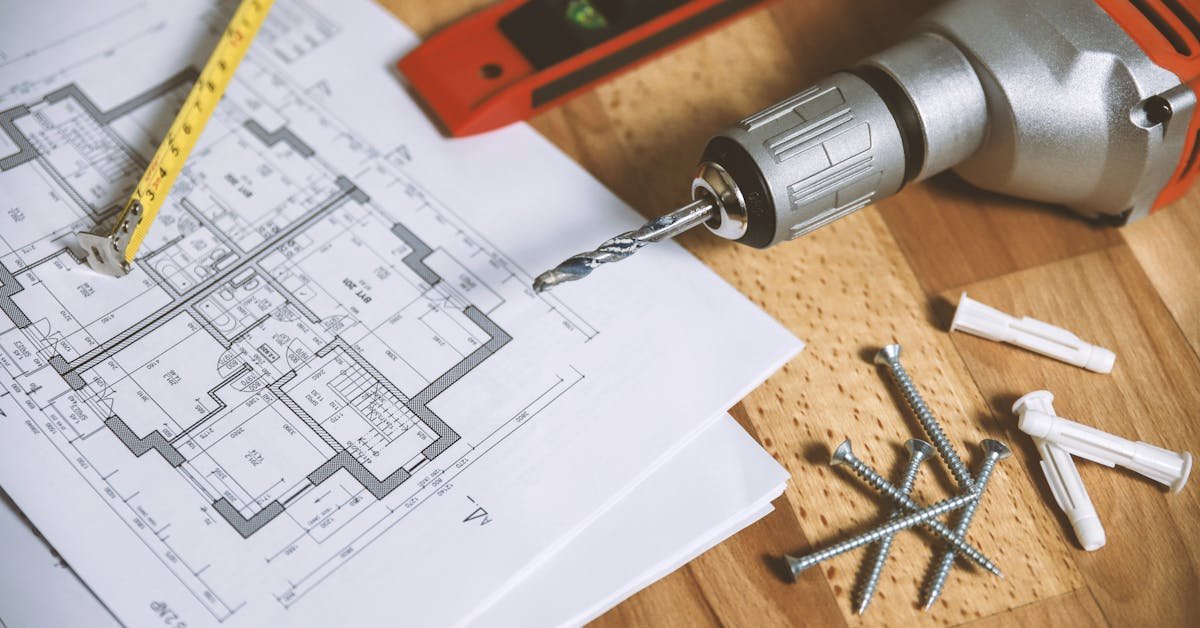
Measured surveys sit at the intersection of technical precision and practical property management. Whether you're an architect planning a fit-out, a landlord preparing letting particulars, or a developer assessing a refurbishment — accurate commercial floor plans are essential. Here's everything you need to know about commissioning a measured survey.
What Is a Measured Survey?
A measured survey is a physical survey of a building carried out to produce accurate dimensional drawings — typically floor plans, but often including elevations, sections, roof plans, site plans and detailed internal drawings. Unlike a building condition survey, a measured survey isn't concerned with the condition of the building — it's about capturing its precise geometry.
The end product of a measured survey is a set of scale drawings, usually produced in CAD format (AutoCAD .dwg being the standard), that can be used by architects, designers, engineers, surveyors, property managers and agents for a wide range of purposes.
What Does a Commercial Measured Survey Include?
The scope of a measured survey can be tailored to the client's specific needs. The most common outputs include:
Floor Plans
Floor plans show the layout of each level of the building — walls, doors, windows, columns, stairs, lifts and fixed fixtures — to an accurate scale. Most commercial measured surveys produce floor plans at 1:100 scale (with key areas sometimes drawn at 1:50 for more detail). Floor plans can be used for letting particulars, marketing brochures, lease plans, refurbishment drawings and space planning exercises.
Elevations
Elevation drawings show the external faces of the building — typically all four principal facades. They are essential for planning applications, listed building consent applications, refurbishment projects and façade surveys.
Sections
Section drawings cut through the building vertically to show internal heights, structural elements and the relationship between floors. They are particularly important for refurbishment and extension projects, and for heritage buildings where floor-to-ceiling heights and structural form are important design constraints.
Roof Plans
Roof plans show the layout and form of the roof — essential for planning roof repairs, solar panel installations, plant room layouts and roof access strategies.
3D Point Cloud Surveys
For complex buildings, heritage properties or large developments, we use terrestrial laser scanning to capture a 3D point cloud of the building — a detailed digital model of the building's geometry with millimetre accuracy. From the point cloud, our team can produce any 2D drawing required, as well as 3D models compatible with BIM (Building Information Modelling) workflows.
When Do You Need a Measured Survey?
Measured surveys are commissioned for a wide range of purposes. The most common triggers in the commercial property sector include:
Refurbishment and Fit-Out Projects
Before an architect or designer can produce refurbishment or fit-out drawings, they need an accurate set of existing floor plans and elevations to work from. If these don't exist — or if existing drawings are old, inaccurate or incomplete — a measured survey is essential. Many expensive design mistakes have been made as a result of working from inaccurate or outdated drawings.
Planning Applications
Planning applications require accurate existing and proposed drawings to the standards expected by local planning authorities. A measured survey provides the foundation for these drawings.
Letting and Sales Particulars
Accurate floor plans are a basic requirement for commercial property marketing. RICS Professional Statement on Property Measurement (IPMS 3 for offices, IPMS Industrial for industrial properties) sets out the standards for measuring commercial property for rental and sales purposes. Our surveys are carried out and certified to these standards.
Lease Plans
A lease plan is a key document in any commercial lease — it defines the demise (the area being let). Lease plans must be accurate and in a format suitable for Land Registry registration. Our lease plans are prepared to the required standard and can be certified for Land Registry purposes.
Asset Registers and Facilities Management
Property managers and facilities teams increasingly use CAD drawings and BIM models as the foundation for their asset management systems. A measured survey provides accurate, up-to-date drawings for facilities management, space planning and asset register purposes.
Dilapidations Surveys
Where a dilapidations survey involves a dispute about the extent of the demise or the identity of specific elements, accurate measured drawings can be an essential supporting document.
How Accurate Is a Commercial Measured Survey?
Accuracy is the fundamental requirement of any measured survey, and the answer depends partly on the technology used. At My Commercial Building Surveyor, we use:
- Leica laser distance measurers for straightforward commercial spaces — accurate to ±1mm
- Total station survey equipment for complex or large buildings — accurate to ±1–2mm
- Terrestrial laser scanning for complex heritage buildings, 3D surveys and BIM deliverables — accurate to ±2–3mm
For most commercial purposes, the relevant RICS standard requires floor areas to be accurate to within ±2% of the true measurement. Our surveys consistently achieve this and typically exceed it.
What Are GIA and NIA — and Why Do They Matter?
Two floor area measurements dominate the commercial property world:
- GIA (Gross Internal Area) — the total floor area measured to the internal face of the external walls, including all internal spaces. Used for industrial, warehouse and retail properties.
- NIA (Net Internal Area) — the usable floor area, excluding structural walls, stairs, lifts, toilets and other non-usable spaces. Used for office and retail properties for rental purposes.
Getting these measurements right matters enormously. Commercial rents are often calculated on a £ per sq ft basis — so an error in the measured area translates directly into an error in rent. For a 10,000 sq ft office building at £30/sq ft, a 2% measurement error means £6,000 per year in incorrect rent — or £90,000 over a 15-year lease term.
Our surveys are carried out to RICS IPMS (International Property Measurement Standards) and certified as such — giving you and your agents full confidence in the figures quoted.
How Long Does a Commercial Measured Survey Take?
The time required depends on the size and complexity of the building:
- Small commercial unit (up to 2,000 sq ft): Half-day site visit; drawings within 3–5 days
- Medium commercial property (2,000–10,000 sq ft): Full-day site visit; drawings within 5–7 days
- Large commercial property (10,000–50,000 sq ft): 1–2 day site visit; drawings within 7–10 days
- Large industrial or complex buildings: 2–3 day site visit; drawings within 10–15 days
What Format Will I Receive My Drawings In?
We supply measured survey drawings in whatever format you need. Our standard delivery is:
- AutoCAD (.dwg) for use by architects, designers and engineers
- PDF for general reference and distribution
- DXF (for compatibility with other CAD applications)
- Revit (.rvt) for BIM projects (on request)
- SketchUp for 3D visualisation purposes (on request)
Why Measured Survey Accuracy Matters
"I was recently asked to carry out a measured survey of a 1970s office building in Manchester that was being prepared for sale. The existing floor plans were from 1978 — photocopied so many times they were barely legible. When I measured up, I found the actual GIA was nearly 8% less than the area that had been marketed for the previous 15 years. That discrepancy had been costing the tenant — and generating unjust rental income for the landlord — for years. Accurate measured surveys matter. They really do."
How to Commission a Measured Survey
The process is simple. Contact us with the following information:
- Property address and type
- Approximate size (if known)
- What drawings you need (floor plans, elevations, sections etc.)
- The intended purpose of the survey
- Your required timescale
We'll provide a fixed-price quote within 2 hours. Site visits can typically be arranged within the week.