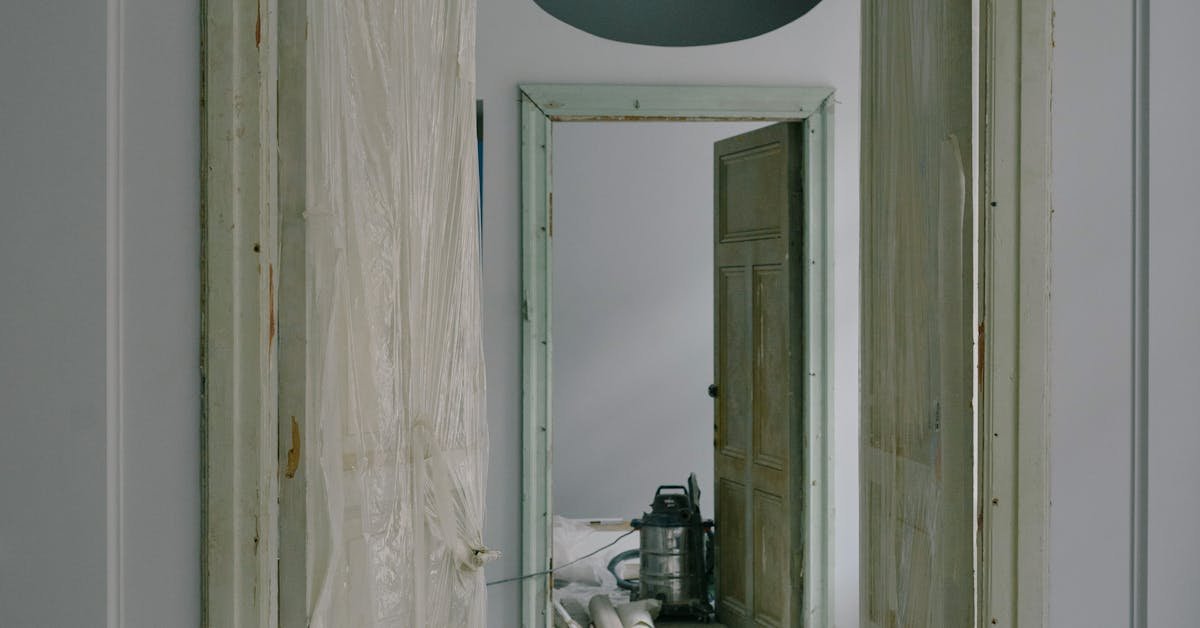
Of all the issues that arise in commercial property, dilapidations are among the most contentious — and often the most financially significant. I've seen tenants walk away from leases facing six-figure claims they had no idea were coming. I've also seen landlords spend months in expensive disputes over claims that a skilled surveyor could have settled in weeks.
Whether you're a commercial landlord or a tenant nearing the end of your commercial lease, understanding dilapidations — and getting the right surveying advice early — can make an enormous difference to your financial outcome.
This guide explains everything you need to know about commercial dilapidations, written plainly and honestly, without the legal jargon that too often obscures what's actually a very practical subject.
What Are Dilapidations?
Dilapidations refer to breaches of a tenant's repair, decoration and reinstatement obligations under a commercial lease. Put simply: if a tenant has not kept the property in the condition required by their lease — whether through failure to repair, redecorate, remove alterations or reinstate original features — those breaches are collectively known as dilapidations.
The concept applies throughout a lease term, but the most significant dilapidations disputes typically arise at the end of a lease, when the landlord inspects the property and assesses the tenant's liability for all outstanding obligations.
It's important to understand that dilapidations are not just about obvious physical damage. They also include:
- Failure to redecorate internally and externally at required intervals
- Failure to remove tenant's alterations and reinstate the original layout
- Failure to comply with statutory obligations (e.g., fire safety, asbestos management)
- Failure to replace worn or failed building elements
What Is a Schedule of Dilapidations?
A schedule of dilapidations is the formal document that sets out a landlord's claim against a tenant for dilapidations breaches. It lists each alleged breach, the works required to remedy it, and — in a terminal schedule — the estimated cost of those works.
There are three types of dilapidations schedule:
- Interim schedule — served during the lease term, requiring the tenant to carry out repairs while the lease continues
- Terminal schedule — served near or at the end of the lease, setting out the full extent of the landlord's claim
- Quantified demand — a schedule with full costing, served after the lease end, forming the basis of any financial claim
Both landlords and tenants should have their own dilapidations surveyor review any schedule. A landlord's schedule, however well prepared, is naturally drafted to maximise the claim — and an experienced tenant's surveyor will regularly identify items that are overstated, incorrectly specified or simply not the tenant's liability at all.
Key Point
- A dilapidations schedule prepared by the landlord's surveyor is NOT a final, unchallengeable demand
- Every item can — and should — be reviewed, challenged and negotiated
- Having your own surveyor review the schedule is almost always worth the cost
- Most dilapidations disputes settle through negotiation, without court proceedings
The Landlord's Position on Dilapidations
As a commercial landlord, your ability to recover dilapidations from a departing tenant depends on several factors:
- The precise wording of the repairing covenant in the lease
- Whether a schedule of condition was prepared at the start of the lease (limiting the tenant's obligations)
- The actual condition of the property at lease end versus the standard required by the lease
- The financial cap on your claim imposed by Section 18 of the Landlord and Tenant Act 1927
One critical point many landlords overlook: your dilapidations claim cannot exceed the diminution in the value of your reversionary interest caused by the dilapidations. This is the Section 18 cap — and it can significantly limit recovery in certain market conditions. We always advise landlords to obtain a Section 18 valuation alongside their schedule of dilapidations to understand their realistic maximum recovery.
For landlords with multiple properties, planned preventative maintenance programmes can reduce dilapidations disputes by ensuring tenants maintain properties to a consistent standard throughout the lease — not just scramble to remedy issues at lease end.
The Tenant's Position on Dilapidations
If you're a tenant facing a dilapidations claim, don't panic — and don't pay the landlord's demand without getting your own surveyor to review it. In my experience, landlords' dilapidations claims are frequently overstated, sometimes significantly so.
Common grounds for challenging or reducing a dilapidations claim include:
- Pre-existing defects — items that were already in disrepair when you took on the lease, particularly if evidenced by a schedule of condition
- Betterment — the landlord is claiming for improvements, not mere reinstatement
- Supersession — the landlord intends to carry out works that would make the claimed remediation irrelevant
- Section 18 cap — the claim exceeds the diminution in value of the landlord's interest
- Incorrect specification — the works claimed are more extensive than necessary to remedy the breach
The most powerful protection a tenant can have at this stage is a schedule of condition prepared at the start of the lease. If the lease limits the tenant's obligations to the condition recorded in that document, many common dilapidations claims simply cannot be pursued.

Section 18 — The Tenant's Most Powerful Defence
Section 18 of the Landlord and Tenant Act 1927 provides two important limitations on a landlord's dilapidations claim. Understanding these is crucial for any tenant facing a significant claim.
The first limb caps the landlord's damages at the amount by which the disrepair reduces the market value of the landlord's reversionary interest. In simple terms: if the landlord could sell the property for the same price regardless of whether the repairs were done, the claim is worth nothing.
The second limb — sometimes called the "Onslow Gardens" rule — provides that no damages are recoverable if the landlord intends to demolish or substantially alter the property after the lease end. If the claimed repairs would be rendered pointless by the landlord's own plans, the tenant shouldn't have to pay for them.
Obtaining a robust Section 18 diminution valuation from an experienced RICS valuer is one of the most cost-effective investments a tenant facing a large dilapidations claim can make. In many cases, it dramatically reduces — or even eliminates — the recoverable claim.
Negotiation and Settlement
The vast majority of commercial dilapidations claims are resolved through negotiation between the parties' surveyors, without the need for court proceedings. This is the preferred outcome for both sides — court proceedings are expensive, time-consuming and unpredictable.
The negotiation process typically works as follows:
- The landlord's surveyor serves a terminal schedule of dilapidations
- The tenant's surveyor reviews the schedule and prepares a counter-schedule — challenging items that are disputed and adjusting costings where the claim is overstated
- The parties exchange without-prejudice correspondence and work through each disputed item
- A meeting of surveyors is held to discuss and resolve outstanding disagreements
- A financial settlement is agreed, typically as a cash payment in lieu of works
At My Commercial Building Surveyor, our dilapidations specialists represent both landlords and tenants at every stage of this process. We know from experience that early, skilled intervention produces significantly better outcomes — and lower costs — than waiting until a dispute has escalated.
Real-World Case Study: Saving a Tenant £180,000
One of our most memorable dilapidations cases involved a national retailer vacating a large high-street unit in Edinburgh after a 15-year lease. The landlord's surveyor served a terminal schedule claiming £340,000 for repairs, reinstatement and redecoration.
Our client's initial instinct was to settle quickly and move on. Instead, they called us. Here's what we found:
- £85,000 of the claim related to the roof — which had been in that condition at the start of the lease, as evidenced by the original schedule of condition
- £45,000 related to the landlord's planned refurbishment works — works that would have been carried out regardless, making them irrecoverable under Section 18
- £30,000 related to specialist flooring — specified at a higher standard than the lease required
- Numerous smaller items totalling around £20,000 that were either not the tenant's liability or incorrectly costed
After a thorough review, counter-schedule and robust negotiation, we settled the claim for £160,000 — saving our client £180,000. The fee for our work? Just over £6,000.
"We honestly thought we had no choice but to pay. Sarah [our surveyor] showed us exactly where the claim was wrong — and saved us more money in two months than we'd made in six."
How to Avoid Dilapidations Disputes
The best dilapidations dispute is the one that never happens. Here are the practical steps that significantly reduce the risk:
- For tenants taking on a new lease: always commission a schedule of condition before you sign — it limits your liability to the condition recorded at the start
- For tenants during the lease: keep on top of your repairing obligations — don't let small issues accumulate into a large dilapidations bill
- For tenants approaching lease end: commission your own dilapidations assessment 12–18 months before expiry — understanding your likely liability early gives you time to carry out works yourself (usually cheaper than paying a cash settlement)
- For landlords: issue interim dilapidations notices during the lease term if obligations are not being met — this prevents a large terminal claim and gives the tenant the chance to comply
Frequently Asked Questions About Dilapidations
Under the Limitation Act 1980, a landlord generally has 6 years from the date the cause of action accrued (typically lease end) to bring a dilapidations claim. However, practically speaking, most claims are served and resolved within 12–18 months of lease end. Delay in serving a claim can weaken the landlord's position.
Yes, but the re-letting may affect the recoverable amount. If the property has been re-let without any of the claimed works being carried out, this is strong evidence that the works were not necessary and may significantly reduce the recoverable damages under Section 18.
Absolutely not. A dilapidations schedule is a claim, not a final demand. Every item is negotiable, and tenants have multiple defences available — including pre-existing defects, the Section 18 cap and supersession. Always get your own surveyor to review the claim before agreeing to pay anything.
The RICS has published a Dilapidations in England and Wales guidance note that sets out best practice for surveyors acting in dilapidations matters. It covers preparation of schedules, the use of quantified demands, negotiation procedures and expert witness duties. All our dilapidations work is conducted in accordance with this guidance.
The VAT treatment of dilapidations payments depends on the circumstances. Cash payments in lieu of works are generally outside the scope of VAT (they are damages, not a supply). However, actual costs of works are subject to VAT. We always advise clients to take specialist tax advice on the VAT treatment of their specific settlement.